





Japanese knotweed is one of the most problematic invasive plant species in the UK — and Yorkshire is no exception. Whether you’re a homeowner, property developer, housing association, or facilities manager, discovering knotweed on your site can have serious legal, financial, and planning implications if it isn’t dealt with correctly.
At S&D Landscapes, we’ve managed Japanese knotweed on development sites, commercial properties, and public land across Yorkshire for many years. In this guide, we explain what Japanese knotweed is, why it’s such a concern, and what you need to do if you find it.
What Is Japanese Knotweed?
Japanese knotweed (Fallopia japonica) is a fast-growing, invasive plant that was introduced to the UK from Japan in the 19th century as an ornamental species. Without any natural predators in this country, it spreads rapidly and is notoriously difficult to eradicate.
In spring and summer it can grow up to 10cm per day, reaching heights of 3 metres. Its root system (known as rhizomes) can extend up to 3 metres deep and 7 metres laterally, allowing it to penetrate foundations, drainage systems, retaining walls, and building structures.
In winter, knotweed dies back above ground — but don’t be fooled. The root system remains very much alive and will return with vigour the following spring.
Key identification features:
- Hollow, bamboo-like stems with purple speckles
- Heart-shaped or shovel-shaped leaves with a flat base
- Dense clusters of small, creamy-white flowers in late summer
- Brown, dead canes that persist through winter
If you’re uncertain whether what you’re looking at is knotweed, it’s always best to seek professional advice rather than attempt to treat it yourself.
Is Japanese Knotweed Illegal?
Japanese knotweed is not illegal to have on your land — but there are strict legal responsibilities around how you manage it.
Under the Wildlife and Countryside Act 1981, it is an offence to plant Japanese knotweed or cause it to spread into the wild. Under the Environmental Protection Act 1990, knotweed is classified as controlled waste, meaning it must be disposed of correctly at a licensed facility — you cannot simply add it to general waste, compost it, or leave it on site.
Landowners also have a duty under the Anti-social Behaviour, Crime and Policing Act 2014 to take reasonable steps to prevent knotweed from spreading to neighbouring properties. Failure to do so can result in a Community Protection Notice and potential legal action from affected neighbours.
In short: if knotweed is on your land, you have a legal obligation to manage it responsibly.
How Does Japanese Knotweed Affect Property Sales?
Knotweed can have a significant impact on a property’s value and saleability. Mortgage lenders take the presence of knotweed seriously — many will decline to lend on a property where knotweed is present or within 7 metres of a habitable structure unless a professional treatment and management plan is in place.
Sellers are also legally required to disclose the presence of knotweed on a property in the TA6 property information form. Failure to do so can result in misrepresentation claims from buyers — even years after a sale has completed.
For developers, discovering knotweed on a site mid-build can cause significant programme delays and cost overruns if it hasn’t been factored into the site investigation and planning stages.
How Does Knotweed Affect Planning Permission?
Local planning authorities across Yorkshire — including Wakefield Council — increasingly require applicants to identify and manage Japanese knotweed as part of the planning process. If knotweed is present on or adjacent to a development site, a Japanese Knotweed Management Plan (JKMP) is often required as a planning condition.
This plan must typically be produced by a qualified contractor and will outline the proposed treatment methodology, timescales, and how the knotweed will be managed or removed prior to or during construction. Building without addressing knotweed in line with a JKMP can put you in breach of planning conditions — with potentially serious consequences for your project.
Treatment vs Excavation: What’s the Right Approach?
There is no single solution for Japanese knotweed — the right approach depends on the size of the infestation, the location, timescales, and the end use of the land.
Herbicide Treatment
Herbicide treatment using approved glyphosate-based products is the most common approach for larger areas or where timescales allow. Treatment typically takes place over two to three growing seasons, with applications in spring and late summer when the plant is actively growing. This method is cost-effective but requires patience — it is a managed, long-term process rather than a quick fix.
Excavation and Removal
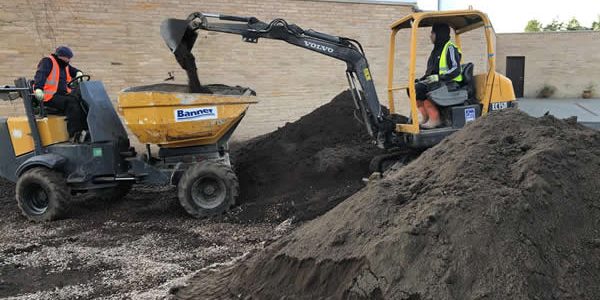
Where time is critical — such as on active development sites — excavation and off-site disposal of knotweed-contaminated soil may be the preferred option. This involves removing all rhizome material to a depth of at least 3 metres and disposing of it at a licensed landfill site as controlled waste. It is a faster solution but significantly more expensive, and requires careful management to avoid spreading rhizome fragments during the dig.
Burial on Site
In some circumstances, knotweed material can be buried on site within an encapsulation cell — a lined pit that contains the rhizomes and prevents regrowth. This requires careful design and must be agreed with the relevant authority. It is typically only suitable where future development will cover the area permanently.
Whichever method is used, all work must be carried out in accordance with the Environment Agency’s Code of Practice for Managing Knotweed and a full site-specific management plan.
Why You Shouldn’t Try to Tackle It Yourself
It’s tempting to attempt to dig out or strim knotweed yourself — but this can make the problem significantly worse. Even a tiny fragment of rhizome left in the ground is capable of regenerating. Disturbing the root system without the right approach can spread knotweed across your site and potentially onto neighbouring land, increasing your legal liability.
Knotweed must be treated as controlled waste throughout the process. Any soil or plant material that has come into contact with knotweed cannot simply be taken to your local tip or spread elsewhere on site.
Using a professional contractor with the right qualifications, equipment, and disposal arrangements is not just best practice — in many cases, it’s a legal requirement.
How S&D Landscapes Can Help
At S&D Landscapes, our team has extensive experience in Japanese knotweed identification, management, and removal across Yorkshire. We work with property developers, local authorities, utility companies, housing associations, and commercial landowners to deliver compliant, cost-effective knotweed management solutions.
Our services include:
- Site surveys and knotweed identification
- Japanese Knotweed Management Plans (JKMPs) for planning compliance
- Herbicide treatment programmes over single or multiple seasons
- Excavation and off-site disposal as controlled waste
- Post-treatment monitoring and certification
All of our work is carried out in full compliance with current legislation and Environment Agency guidance. As a CHAS, SMAS, and Constructionline-accredited contractor, you can be confident that our methods are safe, legal, and thoroughly documented.
Japanese knotweed management often forms part of wider site remediation and preparation work. If you’re looking ahead to construction or site development, our hard landscaping and minor civils services and soft landscaping services can take the site from cleared ground through to a fully finished landscape.
Get In Touch
If you’ve spotted Japanese knotweed on your property or development site — or you’re not sure what you’re dealing with — don’t delay. Early intervention is always more cost-effective than waiting for an infestation to grow.
Contact the S&D Landscapes team today for an initial consultation. We cover Wakefield, Leeds, Bradford, Huddersfield, Sheffield, and the wider Yorkshire region.
Call us on 01924 864792, email info@sdlandscapes.co.uk, or get in touch via our contact page and we’ll be happy to help.


